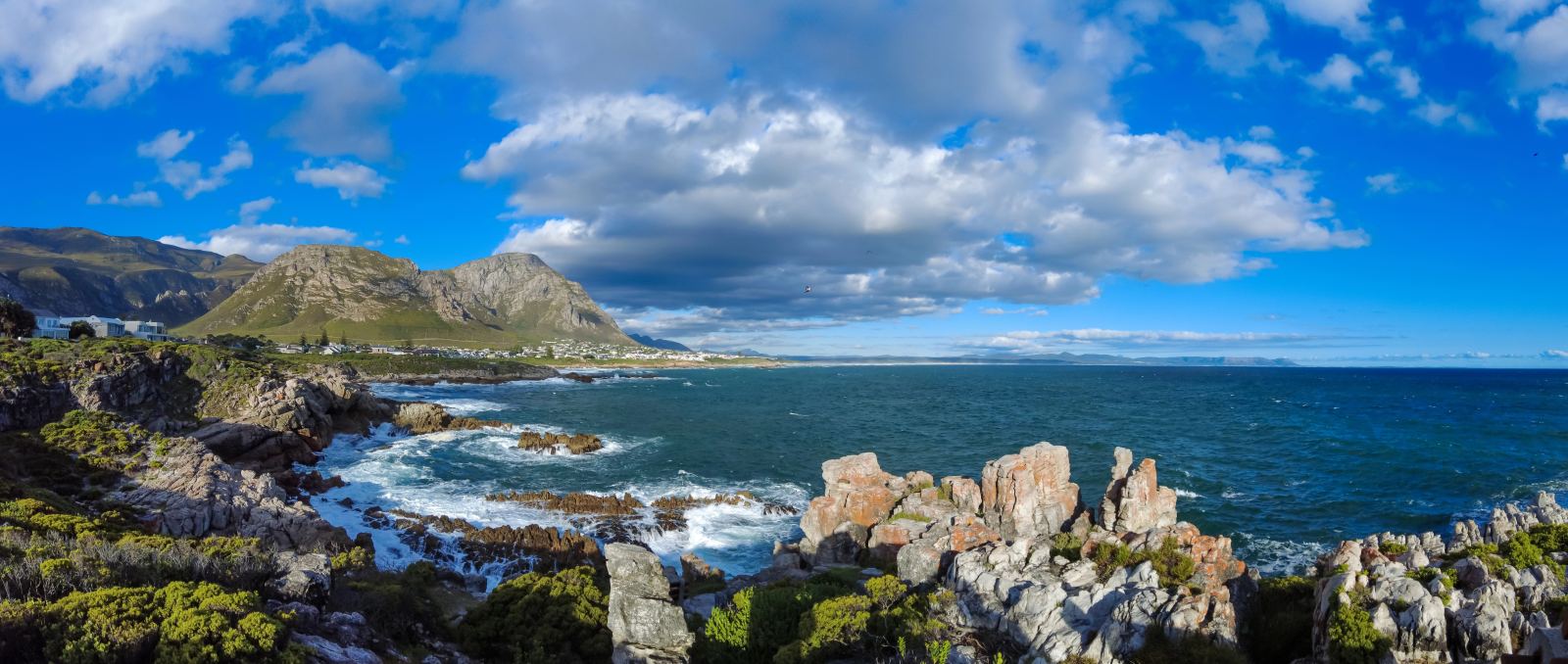
The first afternoon runs the same way for nearly everyone. Park the car, walk to Market Square, read the board with the whale sightings, drop down to the Old Harbour. Then you are standing at Gearing's Point, and the plan for the rest of the day dissolves, because a hundred metres out a back rolls up out of the water. Almost everything worth seeing in Hermanus lies on one path or directly above it. You need no car for it and no tickets, only time and decent shoes.
Eight places are on this page, each with its own page: what it is, how long you need, what it costs and when it is worth going. The order is not a ranking. The Cliff Path comes first because you pass all the others while walking it anyway.
- Places
- 8all reachable on foot
- Admission
- freeapart from the Old Harbour museum
- Cliff Path
- 12 kmconnects nearly all of it
- Best months
- August to Octoberwhales and fynbos in flower
On the cliff
The coast is the reason Hermanus exists. Everything that matters lies along one twelve kilometre path, and on most days the best of it comes past on its own.
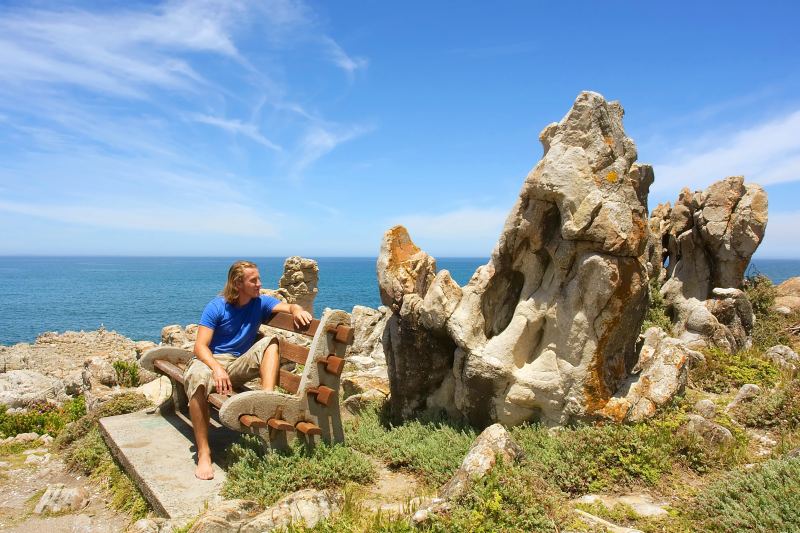
- Cliff Path is the path everything else sits on: twelve kilometres from the New Harbour to Grotto Beach.
- Gearing's Point is the rocky point beside the Old Harbour, with 180 degrees of bay in front of it.
At the old harbour and the new one
Hermanus was a fishing village before it was a whale town. The old harbour shows you what that looked like; the new one is where the boats go out today.
- Old Harbour and museum shows how Hermanus lived before the whales: boats, slipway, fishermen's cottages, whale house.
- Whale Crier has blown a kelp horn whenever a whale appears since 1992, and exists nowhere else.
- Market Square is the middle of town: cafés, the tourism office, the whale sightings board and the way down to the harbour.
- New Harbour is the working harbour in the west, and where the whale boats tie up.

Above the town
Behind the last row of houses the fynbos starts. Two hills, a nature reserve, and paths from which you see the sea from above.
- Fernkloof Nature Reserve sits directly above the town: 60 kilometres of trails through fynbos, free to enter.
- Hoy's Koppie is the hill in the middle of town, with a loop path, a grave, and the view a railway chief wanted to be buried for.
One day, two days, three
With one day you walk the Cliff Path from the New Harbour to Kwaaiwater in the morning, eat at the Old Harbour, go through the museum and sit at Gearing's Point for sunset. Two days add Fernkloof, best in the afternoon when the light lies on the bay. From the third day you drive out: the Hemel-en-Aarde valley, Stanford, the penguins at Betty's Bay.
Our tipBuy nothing and book nothing on your first day. Walk the Cliff Path, listen for the horn, and decide afterwards how long you are really staying. Most people extend.
Common questions about the sights
What should you see in Hermanus?
The Cliff Path, Gearing's Point, the Old Harbour with its museum, the Whale Crier in season, and the Fernkloof reserve above the town. Apart from Fernkloof, all of it sits on one single path.
Do the sights in Hermanus charge admission?
Almost nothing does. The Cliff Path, Gearing's Point, Fernkloof, Hoy's Koppie, Market Square and both harbours are free. Only the museum at the Old Harbour charges, R30, cash (as of August 2026).
How long is the Cliff Path?
Twelve kilometres from the New Harbour to Grotto Beach, almost level, with benches every few hundred metres. The whole thing takes three hours without stops. Most people walk the stretch from the New Harbour to Kwaaiwater, three to four kilometres.
Is one day enough for Hermanus?
For the Cliff Path, the Old Harbour, the museum and sunset at Gearing's Point, yes. Two days add Fernkloof. From the third day you drive out: the wine valley, Stanford, the penguins at Betty's Bay.
What is the Fernkloof Nature Reserve?
A reserve directly above the town: around 18 square kilometres of fynbos with more than 1,250 plant species and 60 kilometres of marked trails. Free entry, open from 06:00 in summer and 07:00 in winter until 19:00 (as of August 2026). The flowering is heaviest from August to October.