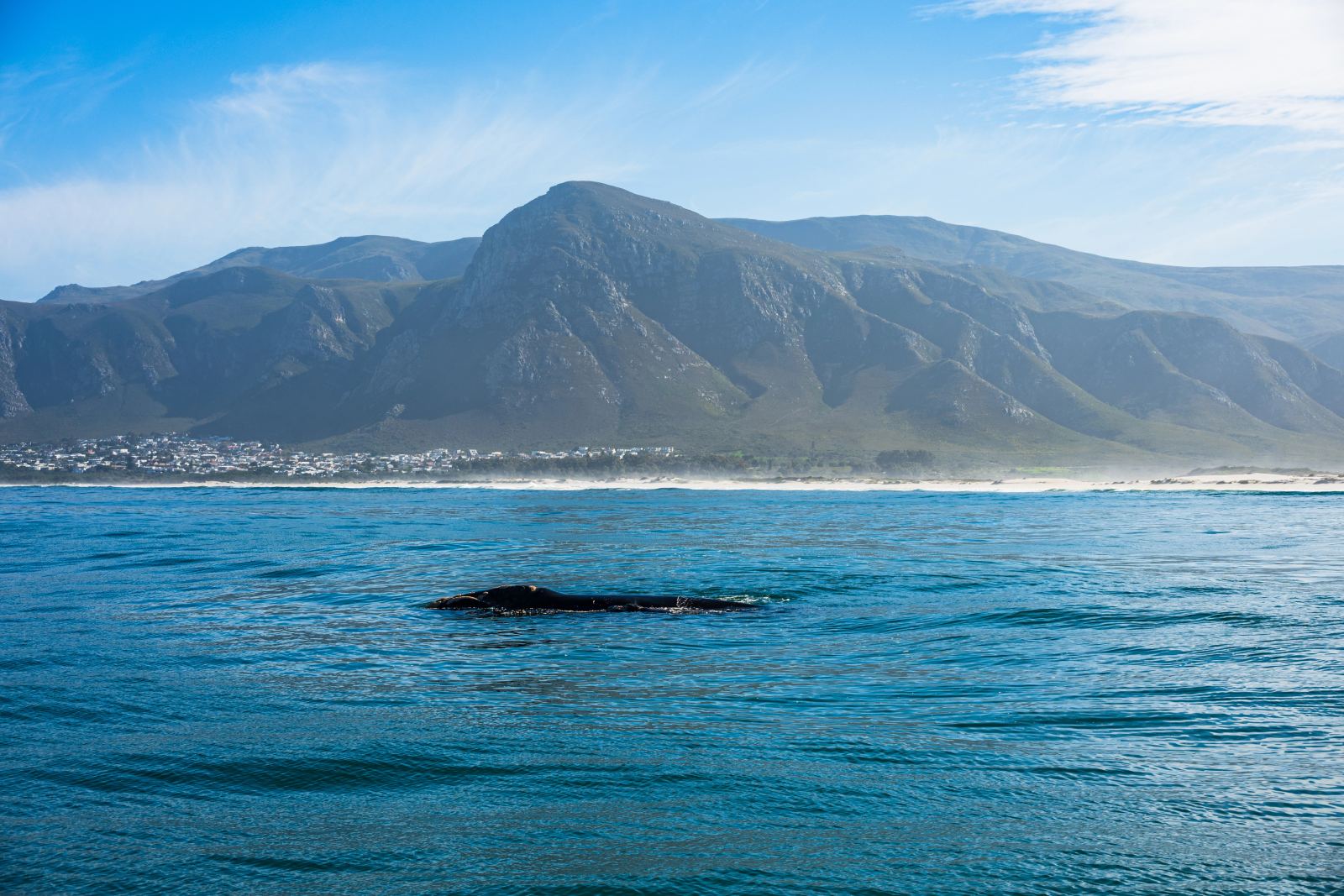
Half past seven at Gearing's Point. The wind has not made up its mind yet and the bay lies flat as sheet metal. Then a white mist rises out of the water, a second one beside it, and a black back rolls through so slowly that your eye can follow the whole of it. No engine, no ticket, no life jacket. In Hermanus you watch whales from the shore, and that is the real reason to come.
When the whales are here
Southern right whales come up from the Southern Ocean into Walker Bay because the water here is shallow, sheltered and calm. They mate, they calve, and the mothers stay close inshore with their calves for weeks. The first animals appear in June. September and October hold the most, November thins out, and the last of them leave in December.
Two other species are a bonus. Humpbacks move along the coast from May to December, usually further out, and they breach more readily than southern rights do. Bryde's whales live off this coast all year but keep their distance and surface only briefly. Come in January and you get dolphins, seals and, with luck, a Bryde's. Not a southern right.
A word on the weather. The season is winter and spring at the Cape: cold fronts bring rain and north-westerly wind, and between them sit days with a flat sea and 18 degrees. On days like that you pick out blows from the cliff kilometres away. With a south-easter and white caps on the water, you lose the animals between the waves.
- Season
- June to Novemberpeak in September and October
- From the shore
- as close as 50 metresmothers and calves inshore
- Boat trip
- from the New Harbourabout two hours
- Whale Crier
- since 1992kelp horn, the only one anywhere
Where to stand on land
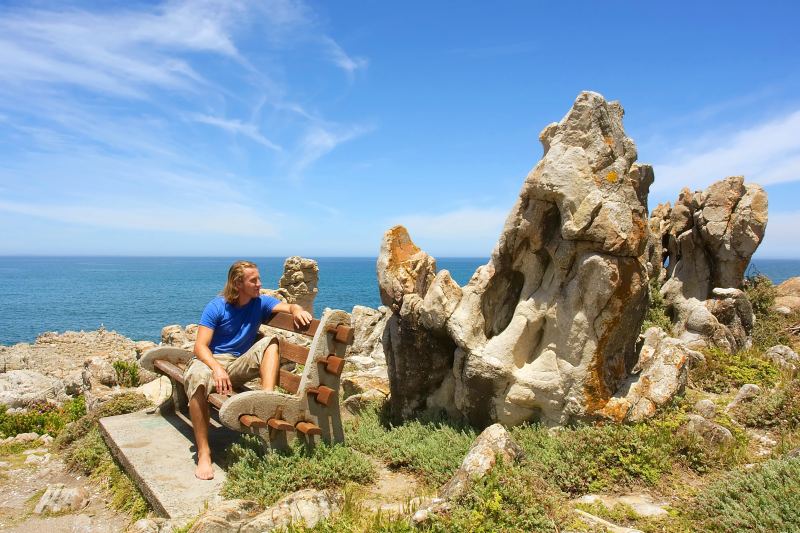
The Cliff Path runs twelve kilometres from the New Harbour in the west to Grotto Beach in the east, and almost every metre of it is a viewpoint. You do not need binoculars. You do need time. The whales set the pace.
- Gearing's Point: the rocky nose beside the Old Harbour, with 180 degrees of bay in front of you. The best known spot, and emptiest in the morning.
- Old Harbour: terraces above the old slipway, benches, cafés within calling distance. If you have one hour, spend it here.
- Sievers Point: a little further east, quieter, with boards that explain what you are looking at. The animals often come closest here.
- Kwaaiwater: between Voëlklip and Kammabaai, reachable by car, with the surf breaking through the rocks. A good spot for late afternoon.
- Voëlklip and Grotto Beach: the eastern beaches, a flatter view, but mothers with calves like the shallow water off them.
And if the bay looks empty? Drive forty minutes east to De Kelders near Gansbaai. The cliffs there are higher and the water below them deeper, and on some days the whales lie closer under the rock than anywhere in Hermanus.
The horn made of kelp
Since August 1992 Hermanus has had a Whale Crier, the only one in the world. In season he walks the seafront and blows a horn of dried kelp whenever a whale shows itself. A publicity stunt from the tourism office, and it stayed. The pattern of notes tells you where the animals are; a board with the signals hangs on his cloak. If you hear the horn, walk towards it. The Whale Crier knows a minute before you do.
Boat or cliff?
The boat trips leave from the New Harbour on the west side of town. A guide runs through what to expect on land, then the catamaran heads out into the bay. Two hours is the average, longer when the water is busy. Licensed boats may approach to within 50 metres, closer only if an animal comes to the boat itself. And that happens: southern rights are curious, they lift their heads out of the water and look.
What it costs: with Southern Right Charters, adults pay R1,580 and children under twelve half (as of August 2026, confirm before booking). Ivanhoe Sea Safaris runs from Gansbaai, forty minutes further east, for R1,450. Mornings are usually calmer than afternoons. If you are prone to seasickness, take the tablet before you board, not once you are out.
Is the boat worth it when the animals are already below the cliff? From land you see backs, blows and the flukes as they dive. From the boat you see the whole animal, hear it breathe, and watch a calf run along its mother's flank. Two different experiences, and anyone with the time should take both. Anyone counting the cost takes the cliff.
The Whale Festival
On the first weekend of October, Hermanus throws a party for the whales, in 2026 from 2 to 4 October (as of August 2026). Three days of stalls, music, marine conservation and exhibitions around the Old Harbour and Market Square. The town fills up, streets close, and rooms are gone months in advance. Want the whales and not the festival? Come a week either side: same animals, half the price, empty benches.
Our tipWalk the Cliff Path before breakfast, between seven and nine. The wind is still asleep, the light comes in low from the east, and the blows stand out white against the dark bay. By afternoon the wind has turned and the water goes rough.
Who two nights are worth it for
Anyone coming for the whales. One day can be grey, windy, the animals far out. The second morning is then the one where you stand at Gearing's Point and stop wanting to leave. If Hermanus is a stop on the Garden Route for you, a single night does the job, but put it in season.
Common questions about the whale season
When is the best time to see whales in Hermanus?
September and October. The first southern rights show up in June, numbers drop through November, and the last leave in December. Come in January and you will see dolphins and seals, but no southern rights.
Where can you see whales from land in Hermanus?
At Gearing's Point beside the Old Harbour, on the terraces above the Old Harbour, at Sievers Point, at Kwaaiwater, and from Voëlklip and Grotto Beach. All of it sits on the Cliff Path. If the bay looks empty, drive forty minutes to De Kelders near Gansbaai, where the cliffs are higher and the animals often closer.
What does a whale watching trip in Hermanus cost?
With Southern Right Charters out of the New Harbour, adults pay R1,580 and children under twelve half that (as of August 2026, confirm before booking). Ivanhoe Sea Safaris runs from Gansbaai for R1,450. A trip takes about two hours.
Which whales come into Walker Bay?
Southern rights from June to November, often close inshore with calves. Humpbacks pass further out from May to December, and they are the ones that breach. Bryde's whales live here all year, keep their distance, and surface only briefly.
What does the Whale Crier do?
In season he walks the seafront and blows a horn made of dried kelp whenever a whale shows itself. He has done it since August 1992. Hermanus is the only town in the world with one, and the pattern of notes tells you where the animals are; the key to the signals hangs on his cloak.
When is the Hermanus Whale Festival?
The first weekend of October, which in 2026 falls on 2 to 4 October (as of August 2026). Three days of stalls, music and marine conservation around the Old Harbour and Market Square. Rooms go months ahead. Come a week either side and you see the same whales at half the price.